It’s Time for 9:16 Framing Guides in All Professional Broadcast Cameras
As live production evolves, camera operators need tools that allow them to confidently compose for both 16:9 and 9:16—before the first shot is ever recorded.
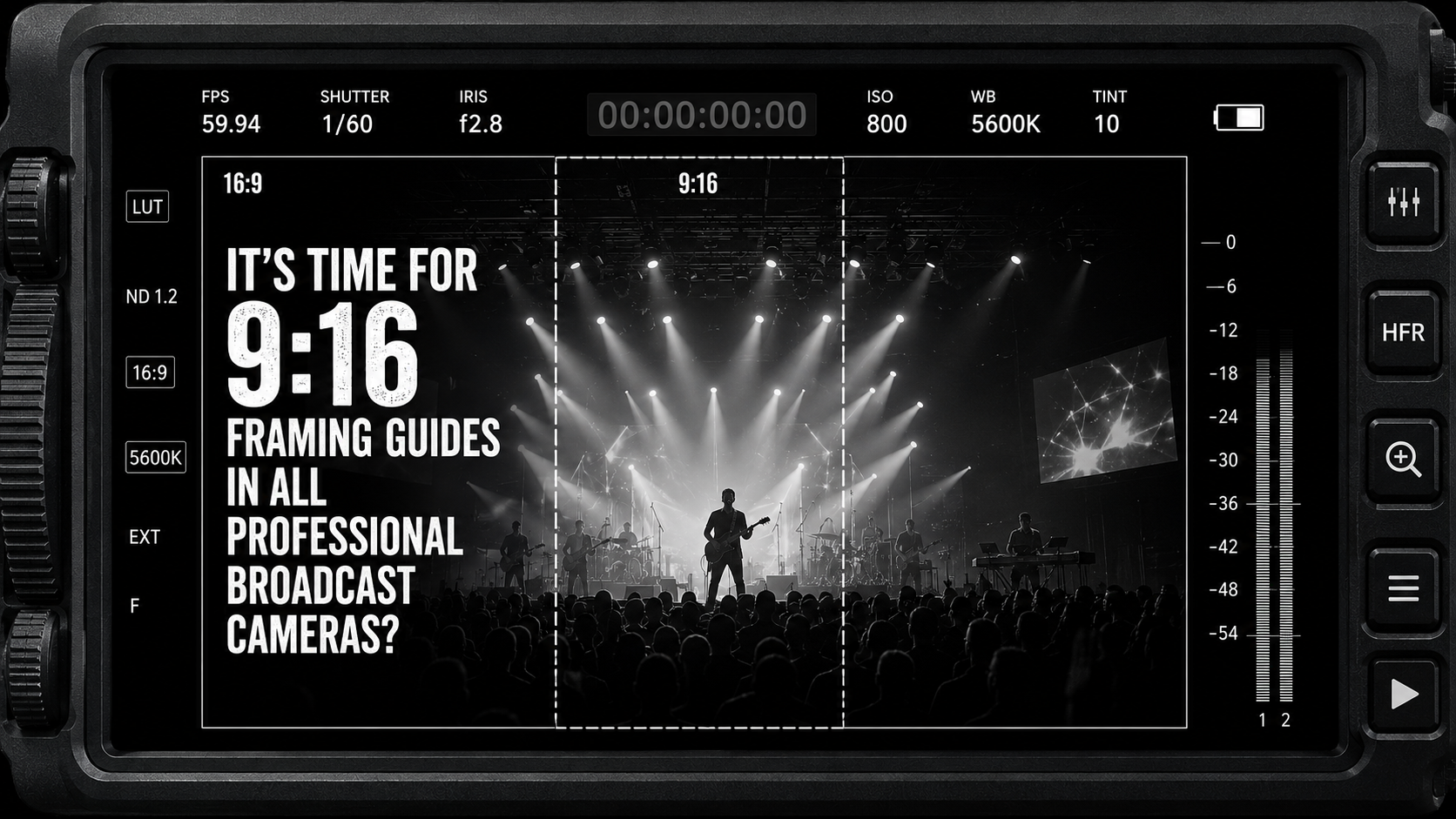
For decades, 16:9 has been the standard for professional broadcast, live events, and ProAV. Camera operators have spent years mastering widescreen composition, creating images that look great on broadcast television, projection screens, and LED walls.
Today, however, live production is evolving.
More productions are incorporating 9:16 vertical LED displays alongside traditional 16:9 center screens, while also delivering content for livestreams, social media, digital signage, and post-event marketing. One camera is no longer serving a single destination—it is expected to serve many.
A Real-World Challenge
On a recent production, we were delivering content to both a traditional 16:9 center screen and dedicated 9:16 vertical LED displays.
As the Technical Director, I quickly realized that a beautifully composed 16:9 shot didn’t always translate into a compelling vertical composition.
The camera operators were doing exactly what they were trained to do—capturing strong, cinematic widescreen images. The challenge wasn’t with their skill or experience.
The challenge was that they couldn’t actually see the vertical frame they were being asked to deliver.
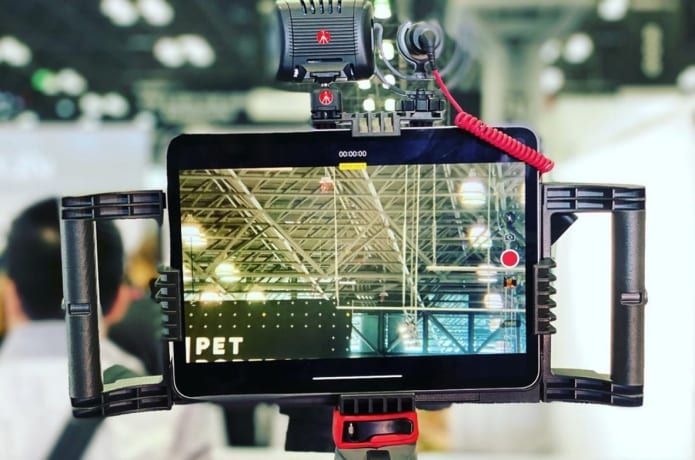
Without a dedicated 9:16 framing guide in the camera’s viewfinder, operators were composing for an image they had to imagine.
One Camera. Multiple Deliverables.
Today’s productions demand far more from a single camera than they did just a few years ago.
One camera may simultaneously provide content for:
- 16:9 IMAG
- Broadcast television
- Live streaming
- ISO recording
- 9:16 vertical LED displays
- Social media
- Post-event marketing
Every destination has different framing requirements, yet operators are still expected to compose using a viewfinder designed primarily around a single aspect ratio.
The Challenge Doesn’t End After the Show
The demand for vertical content doesn’t begin in the edit suite—it begins the moment the camera starts recording.
Most professional broadcast cameras still record in 16:9, but that same footage is increasingly repurposed for:
- Instagram Reels
- TikTok
- YouTube Shorts
- LinkedIn video
- Digital signage
- Promotional campaigns
If the original composition wasn’t created with vertical delivery in mind, editors are often left making compromises.
- Performers are cropped.
- Stage design is lost.
- Graphics no longer fit.
- Balanced compositions become awkward reframes.
Many of these compromises could be avoided before the footage ever reaches post-production.
It Starts During Pre-Production
This conversation isn’t just about camera manufacturers.
It’s equally about production planning.
One question should be asked at the very beginning of every project:
Is this production designed for 16:9, 9:16, or both?
That decision influences almost every creative and technical aspect of the production, including:
- Camera positions
- Lens selection
- Stage layout
- LED screen design
- Graphics placement
- Lower thirds
- Blocking
- Recording strategy
- Post-production workflow
The earlier that decision is made, the easier it becomes to create content that works across every platform.
A Natural Evolution for Professional Cameras
Professional broadcast cameras already provide an impressive set of tools, including:
- Safe-area markers
- Custom frame guides
- Focus assists
- Zebras
- User-configurable overlays
Adding a dedicated 9:16 framing guide feels like the next logical step.
It would allow camera operators to confidently compose for both horizontal and vertical deliverables without relying on guesswork or hoping a crop will work later.
As more productions adopt mixed-format displays and vertical content strategies, viewfinders should evolve to reflect the way they’re actually being used.
Imagine a viewfinder that lets operators visualize:
- The full 16:9 frame
- A protected 9:16 crop
- Safe graphics areas
- Custom LED canvas guides
Giving operators that visibility would improve confidence, composition, and consistency before the image ever reaches the switcher or the editing suite.
Looking Ahead
Vertical video isn’t replacing 16:9.
It’s becoming another professional delivery format.
As live production continues to evolve, so should the tools we place in our camera operators' hands.
When one camera serves multiple audiences, operators shouldn’t have to imagine the vertical frame.
They should be able to see it.
Join the Conversation
I’d love to hear from fellow:
- Technical Directors
- Camera Operators
- Video Engineers
- Broadcast Engineers
- Manufacturers
- Producers
- Creative Directors
Are you seeing more productions requiring dedicated 9:16 deliverables?
Would native 9:16 framing guides improve your workflow, or are today’s tools already meeting the need?
As our industry continues to adapt to new formats and new audiences, conversations like this help shape the tools and workflows we’ll all use in the future.
Let’s keep the conversation going.